
Streamlining Technical Documentation Editing: Integrating Structured Data into Solar Technology Editors
Solar energy projects generate large volumes of technical documents every year, and many delays happen because of formatting issues rather than engineering errors. Permits, compliance files, and installation reports must follow strict layouts to meet regulatory and financing requirements. This places pressure on installers, engineers, and software teams that manage documentation. Editing tools that can automatically structure and format data are becoming essential in modern solar workflows.
Advanced editors in the solar sector are beginning to import structured datasets directly from external systems, much like platforms that generate hotel reservation for visa documents in travel technology. These systems can also provide metrics and insights on how solar panels work and their effici
Why solar documentation often breaks down
Most documentation issues in solar projects are surprisingly small. Tables shift between pages. System capacities appear in different units. Component serial numbers are placed inconsistently. These problems usually arise when teams copy data from spreadsheets into PDFs or combine reports from multiple tools.
Editing software designed for solar workflows can prevent these errors by separating data from layout. Instead of treating documents as static files, modern editors treat them as living structures. Each data point is mapped to a fixed position, ensuring clarity even when updates are required late in the project cycle.
Best practices for formatting automation in solar tools
Automation works best when editors follow regulatory and industry standards. Key fields such as system size, inverter model, site address, and installation date should be locked once approved. Page dimensions should align with common permit formats used by utilities and local authorities.
Template reuse is another critical practice. A single approved layout can serve multiple projects while maintaining visual consistency. When data changes, the editor updates the content without altering spacing or alignment.
- Standardize units for capacity and output.
- Use fixed tables for equipment lists.
- Export finalized files as flattened PDFs.
User interface design for solar documentation editors
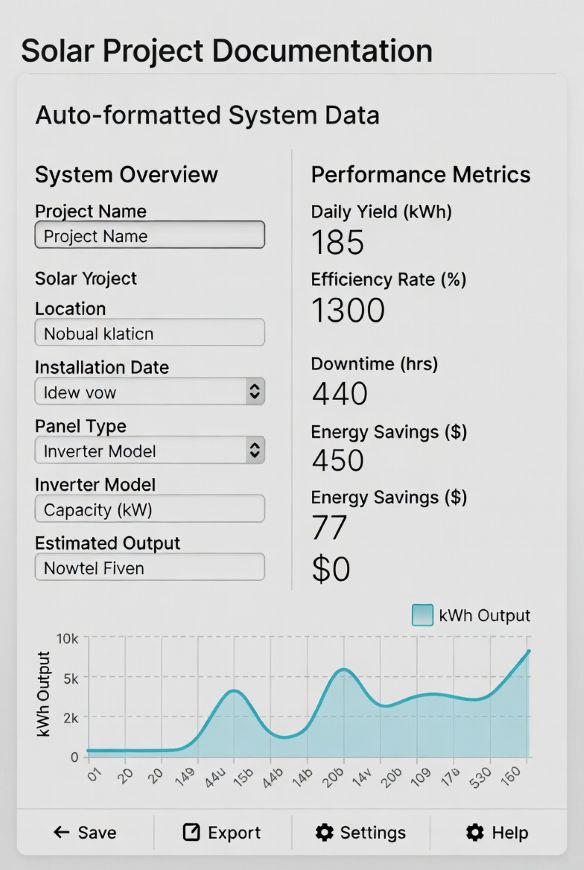
Solar professionals value clarity over complexity. Editors should present only the controls needed for each step of the workflow. Clean dashboards reduce errors and speed up reviews. Live previews allow engineers to confirm accuracy before exporting files.
Freeform drag and drop tools often create inconsistencies. Structured input fields are safer and easier to validate. When external datasets are imported, confirmation prompts reassure users that values are correct and up to date.
Integration examples using structured external data
Solar platforms increasingly rely on external data sources for site assessments, component inventories, and compliance records. When editors connect to these sources through APIs, documentation becomes faster and more reliable. Data arrives in predictable formats, ready for automation.
A system layout report can populate multiple pages with consistent headers and tables. A compliance summary, similar in structure to a hotel reservation for visa document, can present site details, dates, and reference numbers in a clear, review friendly format. This reduces back and forth with regulators.
Turning raw solar data into regulator ready PDFs
The final step in any solar documentation workflow is export. Editors should remove editable layers and unnecessary metadata before saving. File names should follow clear conventions that include project name and location, making retrieval easy for inspectors and financiers.
When editing tools prioritize automation and readability, documentation becomes less of a burden. Installers spend more time on site. Engineers focus on system performance. Software teams deliver tools that remove friction instead of adding steps.
As solar projects grow in scale and complexity, demand will rise for editors that understand structured technical data. Integrating external systems, even those inspired by models like hotel reservation for visa platforms, points toward a future where solar documentation is accurate, consistent, and ready for approval.